
By Dr. David Sanders
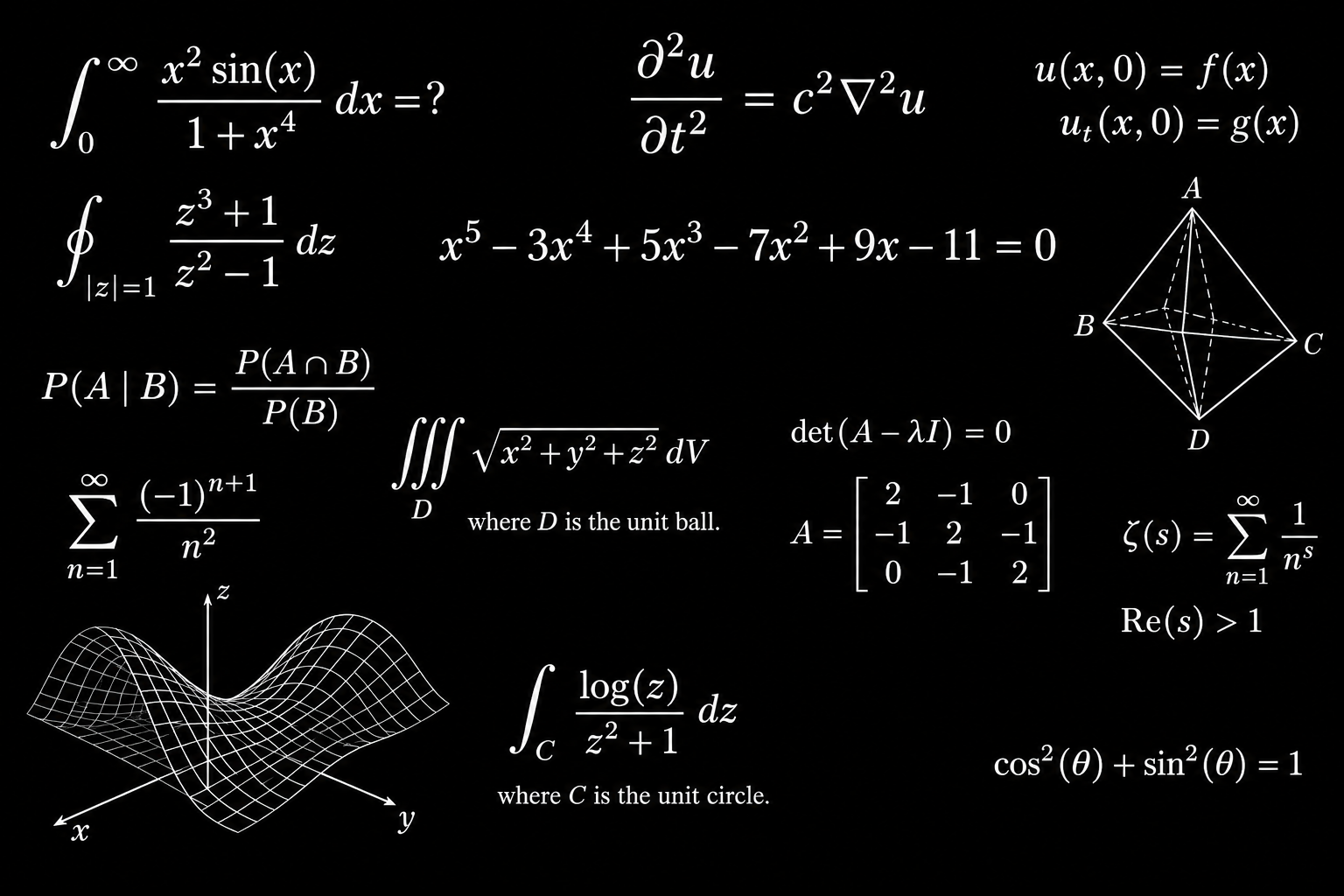
In a recent episode of The New York Times podcast The Daily, titled “When A.I. Comes for Your Purpose in Life,” Cornell mathematician Steven Strogatz confronts a disturbing reality: artificial intelligence is now able to solve mathematical problems that have occupied the greatest human minds for decades, even centuries.
For a mathematician, the discovery of an elegant solution is not merely an intellectual achievement, it is an experience of wonder, beauty, and profound satisfaction. What happens, then, when a machine can arrive at the answer in seconds, bypassing the years of struggle, imagination, and perseverance that have given a mathematician’s life so much meaning?
Toward the end of the conversation, something remarkable happens. Strogatz becomes emotional. He chokes up and begins to talk about the preciousness of life and quotes Ecclesiastes about the vanity of accomplishments.
Strogatz notices that his interviewer, Rachel Abrams, is also tearing up. She initially resists acknowledging her emotions, then with a gentle push back remarks, “I’m the one who makes people cry, Steve.”
What started as an exchange about the mathematical prowess of AI took a decidedly interesting turn. Strogatz was publicly grieving AI’s usurping the quest of his and other mathematician’s passion—solving puzzles. Highlighting the poignancy of his grief is his quoting a student asking why anyone would now bother solving math problems as they have become mere child’s play for AI?
Listening to this interchange brought to mind a story in the Talmud which I first came across fifty years ago. You will see why it stuck with me and its relevance for the tears of a mathematician.
“Rabbi Hanina said to Rabbi Hiyya: If, heaven forfends, the Torah would be forgotten from the Jewish people, I would reconstruct it through the power of my intellect. Rabbi Hiyya responded: I in my way ensure that the Torah will not be forgotten. For I bring flax seeds and I plant them, and after they are mature, I weave nets from their fibers. With those nets I trap deer. I feed the meat to orphans, and I tan the skins of the deer to make parchment. I go to towns that have no teachers and I write the five books of the Torah for five children. And I teach the six orders of the Mishna to six children. To each and every one of these children I say: Teach your order to your friends. In this way all of the children will learn the whole of the Torah and the entire Mishna.”
What always fascinated me about this story is the extraordinary specificity of Rabbi Hiyya’s response. If the objective is simply to preserve the Torah, Rabbi Hiyya could have purchased parchment, hired teachers, and distributed texts. But he is not merely preserving the Torah. He is living in such a way that Torah continues to exist through relationships, actions, generosity, and transmission.
The Torah text that Rabbi Hanina could reconstruct is a monumental intellectual achievement—it is not though engaging others in the discovery process of learning, or all the loving care goes into a teacher’s transmission of knowledge.
This ancient story led me back to consider what is missing in the conversation about AI making mathematics a vanity project. Is the accomplishment of a solution what gives life purpose or is it the engagement in the discovery? Hiking up a mountain is not just about reaching the grandeur of the summit. The climber who ascends has experienced the struggle, effort, discipline, danger, and the eventual achievement. Perhaps, they will even come to an awareness that the higher the peak, the longer the descent, so what is the climb really about? Was Ecclesiastes not just pointing out the vanity of life itself but rather the vanity of focusing on the accomplishment?
Knowing that the path ends at the summit or that the math puzzle has already been solved does not diminish the engagement with the adventure of one’s own creativity. Do you remember the thrill when you “solved” 2+2 =4. The answer was already known, but not to you. The joy was in your discovery.
Professor Strogatz’s anguish is about losing the opportunity find the answers to the most challenging mathematical puzzles. The hero’s journey though is not merely the destination. AI is here to teach us that the answer itself, however important and useful, is only a small part of the human experience and perhaps not the most transformative. What the tears of Steven Strogatz and Rachel Abrams reveal is that while AI may make some of our accomplishments unnecessary, it does not make our lives less meaningful.