While we may strive for overcoming any and all obstacles that stand in the way of manifesting our new self we also acknowledge our limitations. The ideals of the blueprint remain—accepting that we may not follow all its nuances or Read more
Overcome obstacles to implementing your blueprint. There are internal and external obstacles. Will others accept my changes? Will I have the tenacity and persuasion to construct a new life based on the vision of the blueprint? Meditation: Can I see Read more
How is your essence revealed through your work, through your relationships, through your avocations? There may be many details to your blueprint, we are no less complex than a house or building. A house can serve as the metaphoric blueprint Read more
Narrow the focus and choose a blueprint. Formulate it and say it aloud. Draw it, write it down. This is who I am (even if in the next moment your actions don’t resemble the blueprint in the least). Meditation: Set Read more
As we begin to formulate who we are (our free selves)—we want to first and foremost remain open. Tiferet is associated with the gut in the body (our body’s intuition) and for the gut to work smoothly it needs motility. Read more
We are interpreting Tiferet as integration. My Kabbalah teacher emphasizes the inner meaning of the Sefirah of Tiferet as empathy (and Rabbi Jacobson interprets it similarly as compassion). The word Tiferet itself means beauty (or that which harmonizes/balances) and therefore Read more
We are interpreting Gevurah as “limiting” love (from others). In the early Kabbalah it is usually translated as fear or awe. As it is on the left side of the Tree of Life, opposite Chesed, most interpret it as discipline; Read more
Overall intention: To view love and those who love you as your teachers; expanding who you are emotionally and growing your capacity to love. Love comes in many varieties—and we embody the many varieties of love. We receive many gifts in our life from those we love and from those we might even hate.
Imagine for a moment the scene of leaving Egypt at midnight. The moment arrives. God’s love permeates the moment. Finally, freedom. Gather your gifts—first life itself—you have survived, you will walk out of this Egyptian concentration camp. It feels euphoric, chaotic, overwhelming (Chesed). Then focus sets in. First steps and then next steps. Gather what you need. There is not even time to let the bread fully bake. There are limits to what you can take with you, to what you can take in (Gevurah). Your oppressors offer gifts. Accepting the gifts is a harmonizing act, integrating the pain and loss and feeling empathy (Tiferet). Can love win out, will expansiveness be the measure of the day—a day that has no limits. All obstacles have been removed or now can be seen as overcome (Netzach) and there will be a need to let go, to acknowledge that within this euphoria there are those that will not be leaving, nor has an ultimate awareness come to the Egyptians themselves (Hod). And what is Moses doing at this moment? He is finding the bones of Joseph to keep a promise that was made two centuries before, “take my bones out with you from Egypt”. The leader ensures that the moment of leaving is with integrity (Yesod). Then the exodus begins. With trumpet and tambourine and a step over the border. Free at last—with love and for love. Love busts us out—it is that power worth waiting for until the last day, the very last moment.
Day one: Chesed in Chesed
Receiving love is not always easy—it makes us uneasy at times. Underlying this dis-ease is a lack of feeling worthy of the largess of unconditional love. Similarly, are we able to love with no feeling of reciprocity—to love for its own sake. On this first full day of freeing from slavery (of the past) how can you love others and yourself unconditionally? Is this a contradiction? Can I love you the way you want and not give up loving myself?
Set aside a time to meditate without any time limit—just sit and allow the emotion of love to permeate your body and mind. Feel yourself expanding with the meditation. If you want to add words you can say: Love my neighbor—love myself.
Day two: Gevurah in Chesed
The balance of overflowing love is to be focused and even limiting in our love. This not only impacts the ‘quantity of love’ it also defines the ‘quality of love.’ One often recognizes this aspect of love (Gevurah) with the loss of love. After loss the question is can I ever love again? Yet we find that love is generative—it can be born again even from the narrow confines of loss.
We are adding our own way of approaching this 50 day count. Be mindful that this is a practice of living in the present moment; being aware of just today and the possibilities it presents—without being stuck in the past — living with regret of the past , or being stuck in the future—waiting for “then” and not living now.
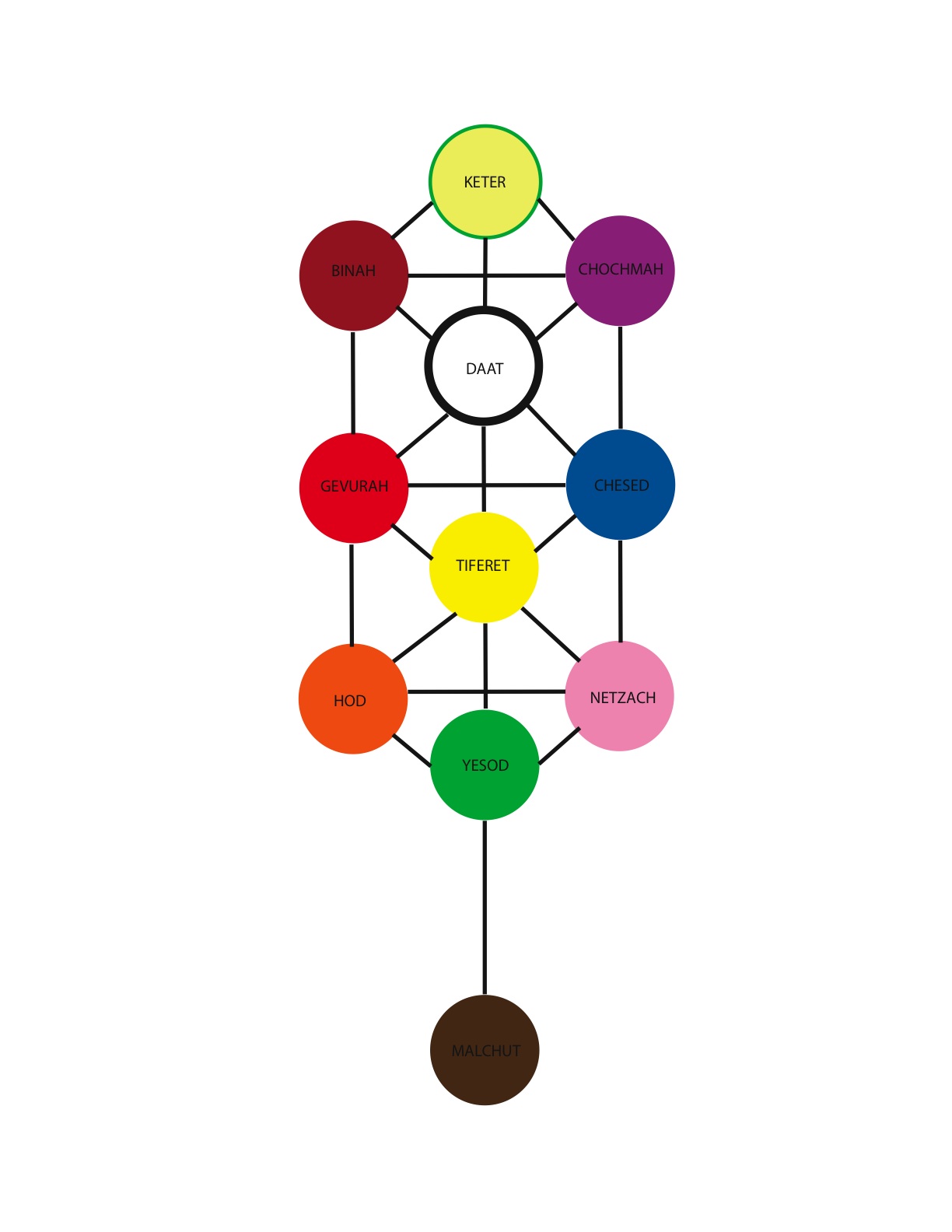
Wonderful teachers have gone before to create a scheme of using the (seven lower) Sefirot and intentions for each day of the week representing one of the seven Sefirot. Each week is an inter-inclusive teaching with the particular Sefirah defining the week. The Sefirah then is the energy of the week—and the specific combination of the overall Sefirah and its connecting Sefirah a particular energy for that day. Please find below a chart with a synopsis of Rabbi Jacobson’s The Spiritual Guide to the Counting of the Omer (1995) and Rabbi Min Kantrowitz’s Counting the Omer: Kabbalistic Meditation Guide (2010). (more…)
Can we start anew each day, each moment? Memory is like an anchor in the flow of time. We remember our ports of call, the people, places, tastes, smells, feelings etc. Can we really ever start anew? Can starting anew Read more